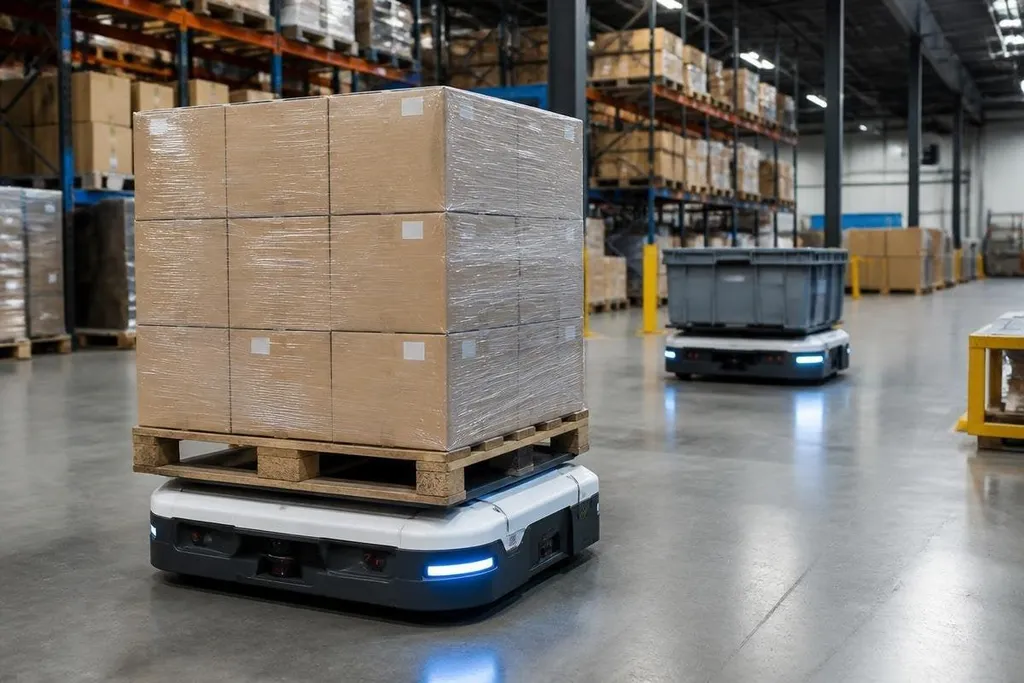
A logistics robot earns its place through repeatable work, clear limits, and a cost you can defend. For an operations manager comparing systems, the useful question is what happens during a full shift after the demo ends.
- Ask for task results, not a feature list
- Check the robot against your floor, loads, and people
- Treat missing price and service data as an open cost
Start with the job
A robot built for pallet movement faces a different test from one built for piece picking. Write down the task, the load, the handoff point, and the result that would make the purchase worthwhile before you compare machines.
The work may include moving totes between storage and packing, carrying pallets across a yard, or feeding parts to a line. Each task changes the needed payload, speed, sensors, charging plan, and safety setup.
The robot that works well in one task may fit poorly in another. Ask the supplier to show the complete task, including pickup, travel, placement, a blocked route, and recovery after an error. A short clip of a successful grasp tells you little about the work between those moments.
Check the robot’s working limits
Payload is the weight the robot can carry or lift under stated conditions. That figure needs context. Ask whether it applies at full reach, during motion, and with the planned gripper or cart attached.
The same check applies to runtime. A battery figure without task details cannot tell you how many hours the robot will work on your floor. Ask for the charge time, swap process, charging space, and behavior when the battery runs low.
Sensors matter for the same reason. A robot using LiDAR, cameras, or both still needs clear rules for people, racks, doors, floor changes, and dropped loads. Ask what happens when a sensor loses sight of its route. Recovery time becomes part of labor planning.
Measure the effect on the shift
A system can move quickly and still add work around it. Count the human steps needed to load, unload, supervise, reset, charge, and maintain the robot. Then compare that total with the task as it runs today.
Deployment work also needs a place in the plan. Ask who maps the site, connects the robot to warehouse software, trains staff, and handles faults. The supplier should name the support process, spare parts plan, software update method, and expected response time.
Those support terms affect the bill after installation. A warehouse manager should compare the robot’s purchase price with software fees, spare parts, staff time, and service visits. Logistics robotics reporting from Robot24.com can add named machines, sites, dates, and results before you judge the full cost.
Price is more than the robot
A purchase price leaves out the parts that keep a system running. Put the robot, gripper, batteries, charging hardware, software fees, installation, training, service, and spare parts in one cost sheet.
Request the price in writing. If the maker has not published it, record that gap rather than filling it with an estimate. The missing number affects the purchase case, and it may affect how you compare a lease, rental, or human-run process.
I'd reject any proposal that cannot show the work rate, service terms, and failure response in plain language. A polished demo cannot replace those details.
A buying check before the pilot
Use this list before asking for a site trial:
- Define the load: record weight, size, shape, and how often the load changes.
- Map the route: mark doors, lifts, crossings, narrow aisles, and places where people work.
- Set the result: choose a rate, uptime target, or labor task the robot must meet.
- Count support work: include charging, resets, cleaning, supervision, and software changes.
- Price the whole system: add hardware, setup, service, spare parts, and any recurring fees.
- Name the failure plan: ask who responds, how fast they arrive, and what staff do meanwhile.
A pilot should run on the real floor with the real load and the planned staff. Record failed pickups, blocked routes, manual resets, charge stops, and time spent waiting. Those figures will tell you more than a smooth demonstration.
The next purchase decision should rest on one measured task, one complete cost sheet, and one written failure plan. If the supplier cannot produce them, the robot is still a proposal, not a logistics system.